Sunday, 27 January 2013

Winter Wildlife at Knettishall


The wildlife has had it rather tough in the last month or so, with heavy rain and flooding in the New Year followed by freezing temperatures keeping the snow on the ground for up to 2 weeks in many places. Knettishall has been no exception, yet the many walkers this month have seen an array of exciting Winter wildlife to report. Between times of the high flood water levels the Little Ouse has proven it's worth since the river work in September (see blog dated 15th Sep 2012):
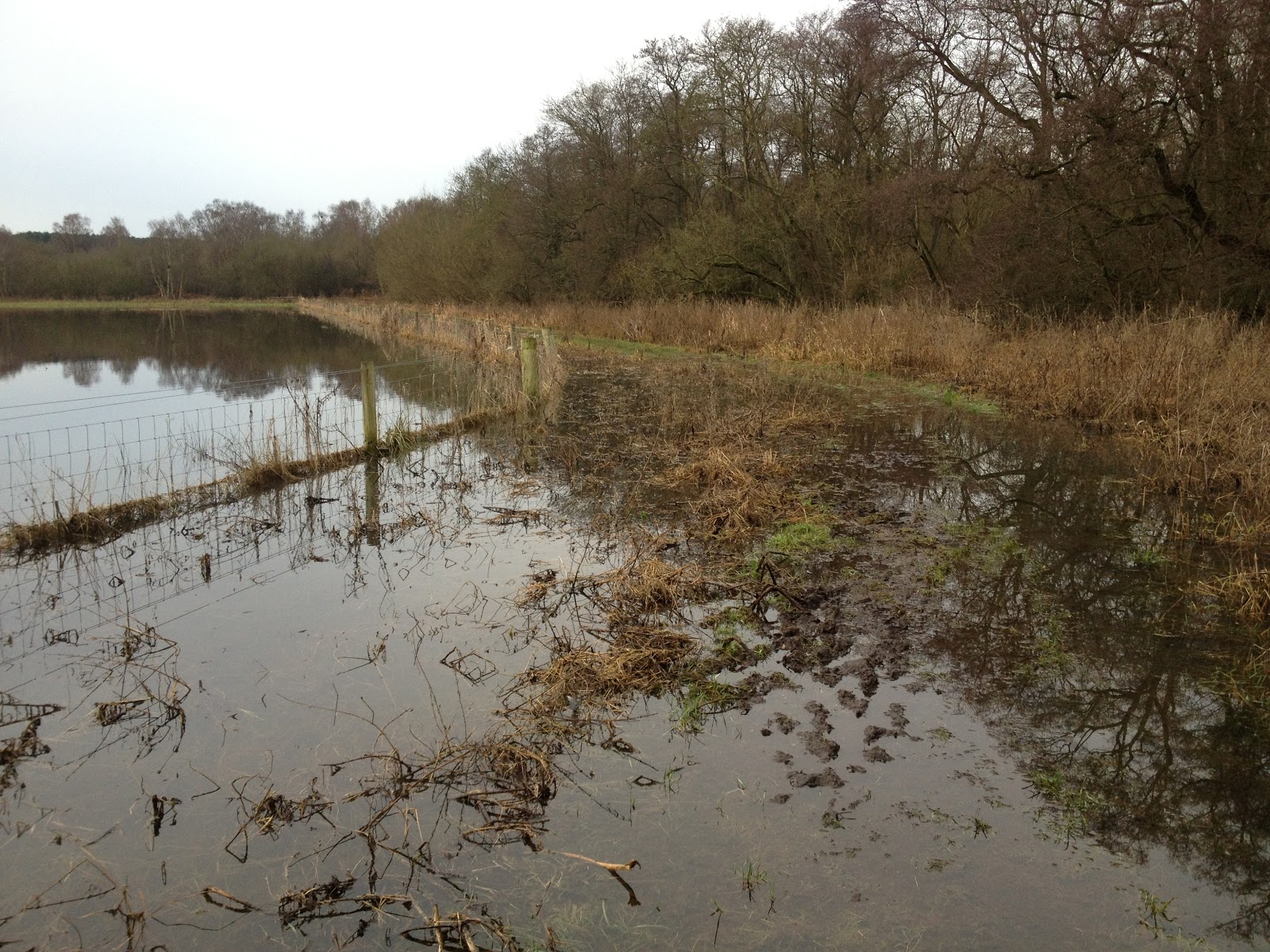
Signs of Otters Lutra lutra using the stretch of the river at Knettishall have been reported as walkers have found Otter spraint along the river path. Grey Wagtails Motacilla cinerea have been sighted fairly regularly particularly at times of lower water levels when the new riffles, where the water flows faster over the rocks, have created greater hunting opportunities for them as they look for invertebrates to feed on. Similarly Kingfishers Alcedo atthis have also benefited from the river work and were spotted hunting up the stretch bordered by the blue river trail (pictured right under flood water) at Knettishall before Christmas.
http://www.wildlifetrusts.org/species/grey-wagtail

Many local walkers have reported regular sightings of a hunting Barn Owl Tyto alba flying low over the meadows in this area, no doubt they are spending more time hunting during the tougher conditions. We hope to encourage this species to breed at Knettishall in the future and any reports are welcome; follow this link to find out more about the Trusts Barn Owl project: 

http://www.wildlifetrusts.org/species/fieldfare
Other species to look out for at Knettishall Heath over the rest of Winter include mixed flocks of Redwing Turdus iliacus and Fieldfare Turdus pilaris. Both members of the Thrush family they are a delight to watch as they move to various trees such as Hawthorn Crataegus monogyna looking for berries to feed on. They can be spotted moving across most areas of the reserve at the moment.

And lastly I believe one of the most rewarding birds when out on a Winter walk is the Goldcrest Regulus regulus. A delightful bird that frequents Coniferous woodland and scrub it is right at home on the reserve. Winter is a great time to look for it as it becomes easier to spot moving around amongst mixed tit flocks.


Thursday, 20 December 2012

Merry Christmas!

Suffolk Wildlife Trust's first year at Knettishall Heath has been a great success with lots of discoveries and new projects underway. However we couldn't have done it all without the many people who came forward to help out volunteering in all areas at the Heath whether it be taking part in our volunteer work parties on the reserve, stock checking our ponies or helping me with youth groups! Also many thanks to the public for attending our new events this year! Here are some great pictures to end the year on, Merry Christmas!!!
Nosy ponies!


The last work party at Knettishall for 2012 finishing with jacket potatoes roasted in the fire!
Our Exmoors in the wintery landscape
Junior Rangers Christmas shelter building!


Junior Rangers Christmas fire lighting!


Saturday, 8 December 2012

Hounds of the Heath

A fantastic new partnership between Suffolk Wildlife Trust and Dog Learning Zone formed earlier this year to create Hounds of the Heath; a community group for dog walkers at Knettishall Heath.

It's free to become a member and by simply providing us with your preferred method of contact we can update our members regularly with important and useful information such as livestock movements, path maintenance or wildlife hotspots. With over 70 members and growing since the launch event in July, Hounds of the Heath now meet on a regular basis for guided walks around the site with Dog Learning Zone, who can offer training hints and tips. This gives myself as the ranger a chance to update everyone, share ideas and also receive any feedback or sightings from the dog walkers who often act as our eyes and ears out on the site almost 24/7.

Hounds of the Heath members on a guided walk
The aim is to eventually engage with everybody who walks their dog at the Heath to allow them to have an input into the new developments on site. It's important for us to get feedback on everything from site management to new events and education opportunities, and Hounds of the Heath is a focus to share information and create long term relationships with one of the highest user groups on site.


Dog agility at the launch event - July 2012
Future prospects aim to see the group growing in number, as well as an annual activity day following in the footsteps of the launch, and upcoming available training sessions. We also aim to set up a dog walkers code of conduct for Knettishall to allow everyone to enjoy the site alongside the wildlife.
If you are interested in joining please contact myself Samantha Gay, People and Wildlife Ranger at:
samantha.gay@suffolkwildlifetrust.org
07717 156601


Friday, 9 November 2012

Autumn at Knettishall Heath

The reserve:

Autumn has been a spectacular month at the Heath with it's diverse wealth of habitats and species adapting to the new season. The Heather has finished flowering with it's splash of colour only to be replaced by the coppers and gold's of the Silver Birch, Bracken, Beech and finally the Oaks, in stark contrast against the dark Pine.

Our resident birds such as Tits, Finches and Thrushes have begun mixing in large flocks for the Winter, moving around the reserve like marauding groups targeting the Hawthorn berries. Whilst Winter visitors such as the Redwing and Fieldfare bring news of the colder weather to come, although perhaps not so cold as 50 years ago. Many of our summer migrants; Blackcap and Swift, were still being recorded fairly recently in the area, and many warblers now choose to brave our warmer Winters than in years passed.


Damp foggy mornings and more regular down pours at the beginning of October meant good news for Fungi experts as the fruiting bodies of Knettishalls fungi began to pop up all over the reserve, just in time for Autumn Antics day on Sunday 7th October.


Autumn Events at Knettishall

'Autumn Antics' was a fantastic expert lead fungi foray paired with a family session hunting for signs of autumn, and the reserve certainly didn't fail us. A total of 47 species of fungi were found and identified in just over 2 hours including the following; Fly Agaric, Clubfoot, Toughshanks and Milkcaps, Blushing Bracket, False Chanterelle, Radish Bonnet, Sulphur Knight, Golden Spindles, Jelly Ear, Beech Woodwart, Ugly Milkcap, Petticoat Mottlegill, Slippery Jack, Turkey Tail and Bay Boletus.


Parasol Fungi before it opens out; one of our largest species

The large cluster in the middle is; Fluted Bird's Nest Fungi 
Amethyst Deceiver

Identifying fungus growing on dead wood

To round off Autumn with a bang Knettishall hosted it's very own 'Halloween at the Heath', a day packed with family activities and trails. Over 30 families braved the spooky blindfold trail and had a go at lantern making, apple carving and potion making in the afternoon sun!

The spooky woodland at Halloween at the Heath


As part of the Trust's first year at the reserve we are learning what is popular with the local community, and both these seasonal events will certainly be repeated next year! To find out more, or for the full list of fungi with common and latin names, or to be added to the mailing list for reserve and events updates please contact Samantha Gay, People and Wildlife Ranger at samantha.gay@suffolkwildlifetrust.org

Saturday, 15 September 2012

Little Ouse river works

If you have visited the Heath in the past week you may have noticed some practical works being undertaken on the Little Ouse; the river that marks our Northern boundary. A project under the Environment Agency (EA) has been targeting restoration work on rivers across the country this year. Working in partnership with conservation charities and other countryside management organisations, including Suffolk Wildlife Trust, the EA targeted the Little Ouse to host the first major river restoration work undertaken in Suffolk. This was partly due to land alongside the river being owned or managed by many of the partners in the project, and the river will be used as a demonstration of what can be achieved in our water ways throughout Suffolk.

Why was restoration work needed?
Pre-restoration the Little Ouse had been heavily modified over time by mans intervention, such as continued dredging of the water course and possible historical use as a travelling route for small trade boats. This had left the river very straight and deep sided with a poor flow, resulting in the clogging of vegetation and the degradation of species habitats and diversity. (See photo right) A full programme of surveying has been undertaken previous to this work to ensure areas of the river that may have been sensitive to work, such as water vole habitat, were highlighted.

Explaining the practical work:
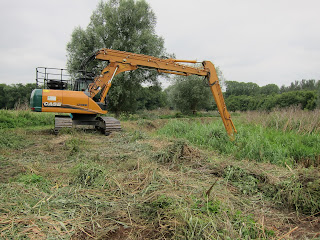
The aim of the project was to return the river to it's natural state by restoring features such as pools, riffles and meanders. Manually creating these features was achieved with a mechanical digger (see photo right), and although it may have looked fairly destructive at first, the simplicity of the work is very effective. Vegetation was cleared along the river to allow digger access, which then moved upstream along the bank clearing out deep pools on one side of the meander, and depositing the material on the other side.

This action re-creates the natural curve of the river within the channel and is partnered by the deposition of rocks and debris between meanders to create natural 'riffles'. Riffles are where the water increases it's flow where it is narrowed over rocks creating a 'babbling brook' effect, increasing oxygen levels in the water and increasing water quality.


Diagram above showing the natural meander recreated within the channel
It won't take long for the river and it's biodiversity to adjust to this re-naturalisation; vegetation will quickly take root in the deposited debris creating attractive habitats for freshwater invertebrates, whilst fish will use the deep pools and create hunting areas for Kingfisher and Otter.
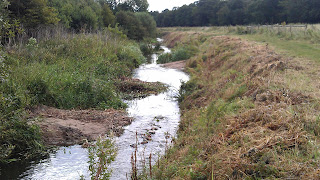
Photo showing the new natural meanders within the long channel
Four days after the work had finished, there were already reports of more regular wildlife sightings on the river; the increased flow has cleared out any muddy debris or dead vegetation and the river already is visibly more appealing. If you get a moment in the next couple of weeks it is well worth a trip to see the difference!
For any more information or queries please don't hesitate to contact Samantha Gay the People and Wildlife Ranger:
samantha.gay@suffolkwildlifetrust.org

Monday, 13 August 2012

Summer Holiday Fun at the Heath!

Finally the warm weather has graced us with it's presence at Knettishall and the new events programme is well under way. With at least one family drop-in session a week as well as two taster sessions of Junior Rangers - there has been plenty to encourage visiting families to take part in outdoor activities and discover the reserve.

Our family drop-in sessions run monthly outside of the school holidays and have now been running every Sunday accompanied by the odd Thursday session throughout August. The aim of these sessions is to provide a point of information and education for all ages, and each one is themed differently. Running 2 - 4pm families or anyone seeking extra information can just drop in throughout the two hours; past activities have included minibeast hunting and making natural art objects (below right). The next session takes place on Sunday 5th August and will look at Animal Olympians around the reserve.

The summer has also seen the launch of two taster sessions of Junior Rangers, aimed at 6 - 12 year olds specifically to get young people involved in the natural world. The first session on Thursday 2nd August kickstarted with fun team building activities and summer spotter games. The second takes place on Thursday 16th August 10.30am - 12.30pm and will be an introduction to river dipping. Junior Rangers is free and will then run monthly all year round. For more information on the events schedule at Knettishall either contact Samantha Gay at samantha.gay@suffolkwildlifetrust.org or visit the facebook page for regular events updates at www.facebook.com/KnettishallHeath.

Sunday, 1 July 2012

Updates on conservation grazing at the Heath

Knettishall Heath currently has 11 Exmoor Ponies and 10 Dartmoor Ponies carrying out conservation grazing throughout the reserve, as well as some young cattle from a local grzieer on the wet meadows bordering the river.
Dartmoor Ponies grazing at Knettishall Heath
Many of you may have noticed that we have had some recent livestock movements at Knettishall Heath, namely with the Exmoor Ponies. On Monday June 11th we had the vet and farrier visit for the day to do their 6 monthly checks and so this meant rounding up what were all the 14 Exmoors from the main Heathland enclosure. Staff had previously set up a round-up pen at the Southern end of the enclosure over a week before hand to help get the ponies used to the sight of it.

With the expertise of the Trust's livestock manager the ponies were calmly gathered into the pen. Whilst waiting for the vet and farrier this also gave staff and volunteers a chance to get a rare closer look at the ponies and get to know their various identities and characters. When they are grazing out on the Heath you will ususally never get within touching distance of these Exmoors, which is what makes them the perfect species to handle the amount of visitors that Knettishall attracts; they are usually fairly aloof of most things whether it be a dog walker or groups of school children, and this way they stay out of trouble!


On the day the farrier checked and/or treated all 14 Exmoor Ponies as helpers carefully saw them one at a time through the gate system into the pens (pictures above and right). 3 of the Ponies were then herded into the horse box to be taken back to the 'livestock HQ' at the Coast for paper work to be updated and for specific dieting!  However the grazing pressure now needs to be taken slightly off the vegetation in the main heathland block and so only the next 6 were let back onto the Heath for continued grazing. The remaining 5 were to be moved down the reserve slightly to the enclosure that hadn't been grazed since the Council used it last year. This Eastern grassland block (seen below right) had flourished well with the Spring Flush and was now ready to be grazed for a while, and this is where you will now find the remaining 5 Ponies (see picture below left). Access to third enclosure is though the gate on the far side via the Woodland Trail; the gate nearest the car park and road has to be locked as it it is not livestock friendly and may cause an escape. The project for a new full access gate here is currently being worked on.

It is essential that conservation grazing is appropriately managed at Knettishall Heath to ensure the flora is neither over or under grazed, and so livestock movements around the site in the future will not be that uncommon. However the management of this reserve is all about creating that perfect balance between people and wildlife, and it is worth saying that no matter what happens with the livestock, no new
restrictions will be imposed on the site for visitors other than those already inplace. These are simply that we ask visitors to be respectful of the livestock by monitoring children and dogs, and that by law dogs must be on leads on the open Heath between 1st March and 31st July due to ground nesting birds. We know people enjoy visiting the site and seeing the ponies, but that it is also a great place to walk your four pawed friends, so look out for the next blog on our latest project; 'Hounds of the Heath' our new canine community!